
Extraordinary Snail Stories at the CIPHER Coffee Hour
Giovanna Yumi Scorsim Omura turned a coffee hour into a malacology lesson
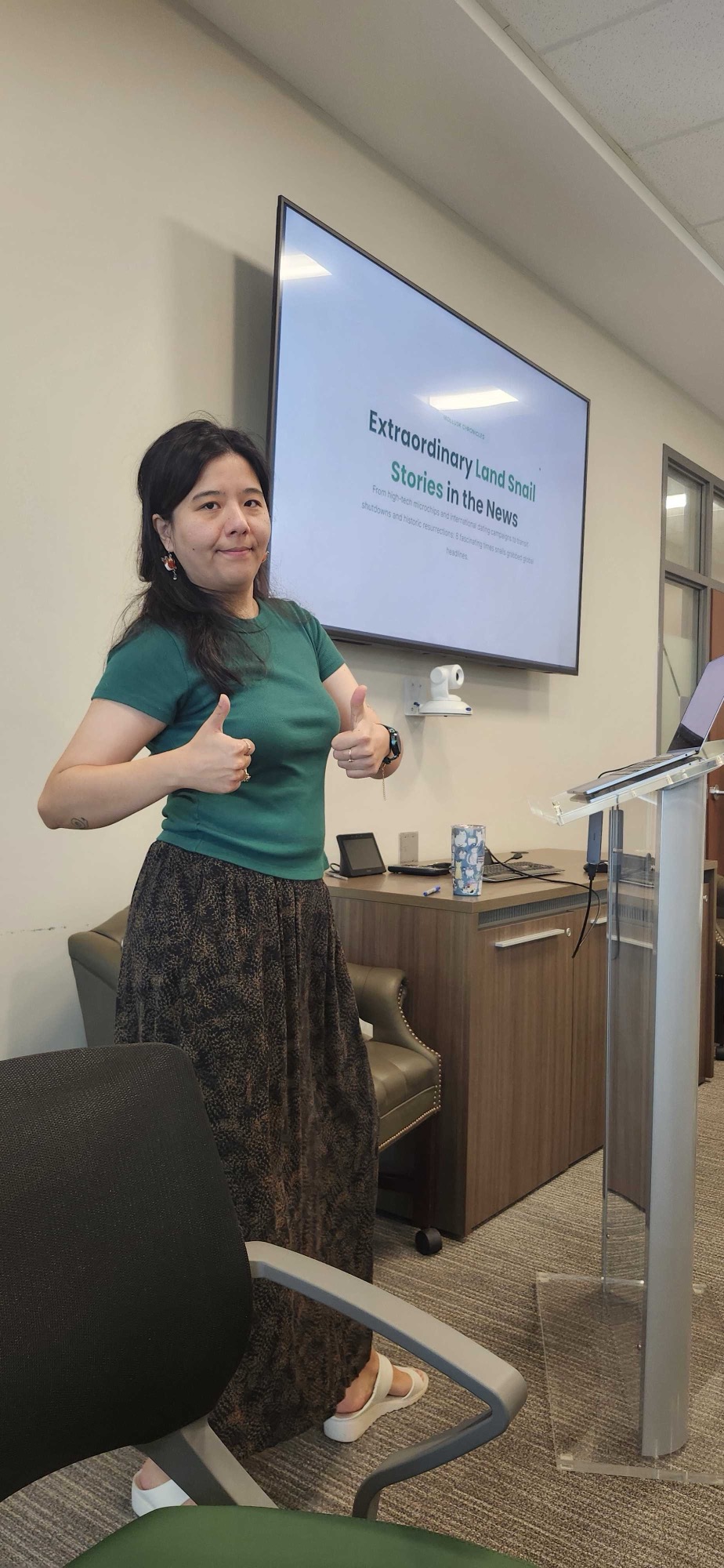
On Wednesday, September 2, 2026, from 10:00 to 11:00 AM, our Ph.D. candidate Giovanna Yumi Scorsim Omura hosted an outreach activity in the CIPHER Center seminar room. She called it Extraordinary Land Snail Stories in the News. She brought a shell puzzle, a stack of reference books, and a set of headlines that most people never expected to read about snails.
The puzzle: can you tell a marine shell from a land shell?
Giovanna spread dozens of shells across the seminar room table and asked visitors to sort them into two piles, marine and land. The question sounds easy until you try it. Shape, thickness, sculpture, and aperture all carry clues, and none of them work every time. People who had never thought about a snail before spent the hour arguing about shell morphology, which is the whole point of an outreach activity.
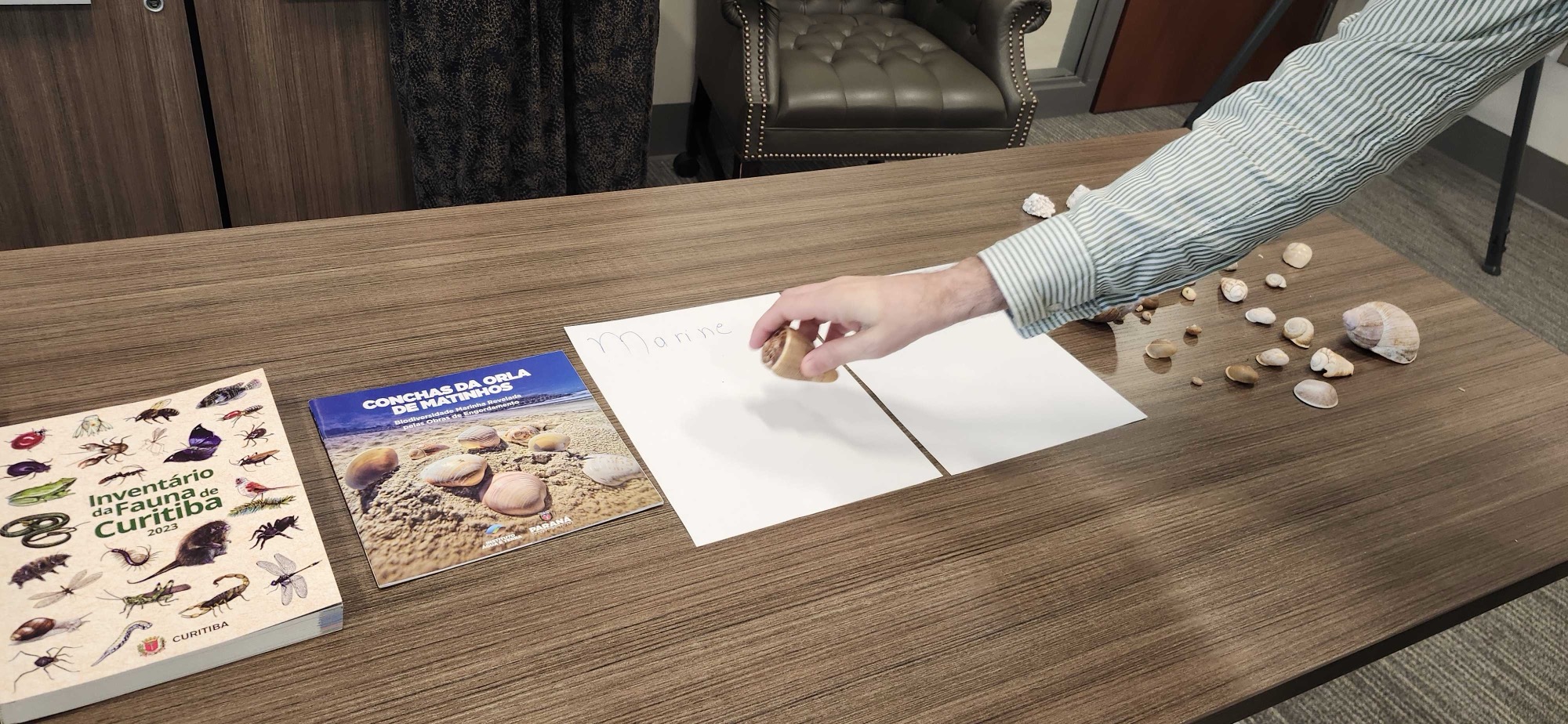
She backed the puzzle with two references from Brazil, Conchas da Orla de Matinhos and Inventario da Fauna de Curitiba. Both books show what a regional survey of mollusks looks like on paper, and both gave visitors somewhere to go after the puzzle ended.
The stories: eight times snails made global news
The second half of the hour covered land snails in the press, from high-tech microchips glued to shells, to an international dating campaign for a lonely snail, to a species brought back from the edge. Giovanna used each headline to explain the biology underneath it. That is a harder trick than it looks, because a good story can carry a bad fact. She kept the science straight and the room laughing at the same time.
Why this matters
Giovanna studies museum genomics of Triodopsis Rafinesque, 1819 land snails, and her dissertation work sits deep inside phylogenetics, mitogenomics, and natural history collections. None of that is easy to explain over coffee. She explained it anyway, to an audience that walked in for the coffee and stayed for the snails.
Outreach like this costs real time, and Giovanna volunteered every minute of it. She designed the activity, gathered the specimens, built the slides, and ran the room. Thank you, Giovanna, and congratulations on an hour well spent. Our lab is better because you keep doing this.
Previous post
Two Posters, One Big Day at the Summer Research Symposium 2026
Next post
BiAS Industry Seminar: Navigating the Bioinformatics Job Market